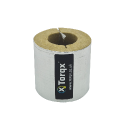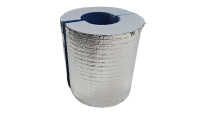
Choosing the Right Torqx Pipe Support Blocks?

In this article we consider the benefits of each type of Torqx Pipe Support Block, so you can chose the best option to meet your project requirements.
Pipe support blocks are essential components for installing pipework, in order to provide support and prevent insulation compression at suspension or support points. But with many options available, which Pipe Support Blocks should you choose?
Torqx Pipe Support Blocks
The Torqx range of pipe support blocks provide trusted solutions, fulfilling the increasing needs of specifiers, contractors, and installers:
- Torqx FSC® Hardwood Blocks
- Torqx Phenolic Blocks
- Torqx Mineral Wool Blocks
- Torqx Calcium Blocks
Supporting the weight of the pipe and their contents (compressive load) pipe support blocks are important because they:
- Isolate the pipework from the pipe support to provide thermal insulation
- Reduce heat transfer
- Reduce thermal bridging
- Provide a continuous vapour barrier on cold / chilled systems
Here we provide a comparison of Torqx FSC® Hardwood Blocks, Torqx Phenolic Blocks, Torqx Mineral Wool Blocks and Torqx Calcium Blocks to offer an insight into their key differences. Giving you a summary of their properties, advantages and disadvantages, so you can make an informed choice depending on your project requirements.
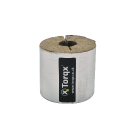
Torqx FSC® Hardwood Blocks
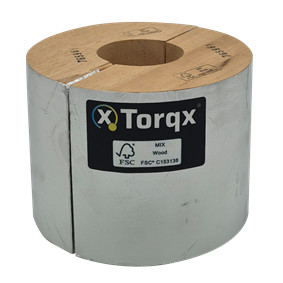
Certified by the Forest Stewardship Council® (FSC®) Torqx Hardwood Blocks are made from a sustainable wood source. They have a foil facing finish to provide an integral vapour barrier.
Hardwood blocks have been used by pipe installers for many years, however with fire and insulation standards becoming increasingly important they are no longer the default option they used to be. BS 5970:2012 the code of practice for selecting thermal insulation systems for pipework, ductwork and associated equipment, advises that due to their poor insulation properties hardwood blocks should only be used when it can be proven an alternative insulation block cannot meet the load requirements. The real benefit for using hardwood blocks is still their superior compressive strength and rigidity allowing them to withstand much higher loads and pressures without deformation compared to alternatives.
Advantages:
- Low cost
- Strong with high load bearing strength
- Durable, making them easy to store and transport
- Environmentally friendly, when made from a sustainable wood source
Disadvantages:
- Substandard insulation properties
- Non-fire-resistant
Applications:
For projects where compression strength and durability are prioritised over insulation or fire resistance.
You can view our Torqx Hardwood Blocks.
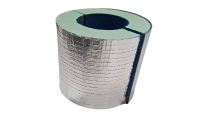
Torqx Phenolic Blocks
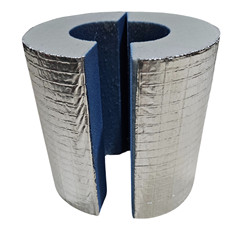
Made from load-bearing phenolic foam they provide excellent thermal insulation, with energy saving benefits for heated or chilled systems (by restricting heat loss / gain). They can be used with Low Temperature, Hot Water (LTHW) as well as Chilled Water Systems (CHW) pipework between -50°C and 110°C. Torqx Phenolic Blocks have a half metal sleeve applied as standard for sizes 48mm diameter for added strength. Although Phenolic foam is a combustible material it holds a fire classification of BL-S1, d0, with low smoke emission. The blocks also have a foil facing finish to provide an integral vapour barrier.
Advantages:
- Industry leading thermal insulation at a competitive cost
- Space saving as a comparatively thinner material can be used to achieve the same thermal performance
- Fire Classification: BL-S1, d0 (combustible but improved resistance with low smoke emission)
- Operating Temperature Range: -50°C to 110°C making them suitable for LTHW and CHW systems in compliance with the BS EN ISO 10211: 2007
- They are a closed cell insulation, that provides high moisture resistance (minimum 90%)
- 100% CFC and HCFC free, zero Ozone depletion potential & low global warming potential
Disadvantages:
- Lower fire resistance compared to Mineral Wool Blocks
- Requires careful handling to avoid damage
- Lower compressive strength compared to Mineral Wool and Hardwood Blocks
Applications:
Ideal for energy-efficient systems (heated/chilled) where thermal insulation is critical and only moderate fire resistance is required. Widely specified and used for HVAC and process pipework.
You can view our Torqx Phenolic Blocks.
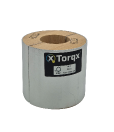
Torqx Mineral Wool Blocks
Torqx Mineral Wool Blocks are manufactured from high density non-combustible 200Kg Stone Wool. They offer good thermal insulation with a high load bearing capacity. They can be used for most temperatures in pipework from 0 – 660°C, so are suitable for LTHW, CHW, plus Hot Temperature, Hot Water (HTHW) systems. Torqx Mineral Wool Blocks are A1 rated for their reaction to fire as they cannot contribute to a fire at any stage, including a fully developed fire. However, they aren’t suitable for use in sub-zero temperatures. They have a foil facing finish to provide an integral vapour barrier.
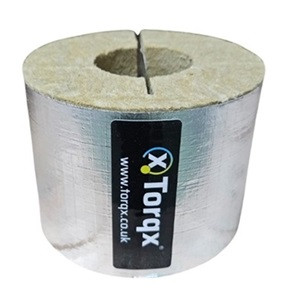
Advantages:
- A1 Fire Rating (non-combustible), according to EN 14303:2009 (EN 13501-1)
- Suitable for high-temperature systems (up to 660°C)
- Mineral wool can be recycled, so is more environmentally friendly
- Good thermal conductivity
Disadvantages:
- More expensive than other options
- Less efficient thermal insulation compared to Phenolic Blocks
- Not suitable for sub-zero temperatures
Applications:
Best suited for high-temperature pipework where fire resistance and environmental considerations are important. Most widely specified and used for Industrial, Process and HVAC pipework.
View our Torqx Mineral Wool Blocks.
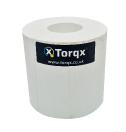
Torqx Calcium Blocks
Torqx Calcium Blocks are made from non-combustible calcium silicate which offers thermal efficiency for hot process applications (0.07W/mK). Calcium silicate pipe support blocks are widely used in industrial and commercial pipe systems due to their high compressive strength (density 265kg/m3), resistance to fire and thermal insulation properties. Suitable for LTHW, CHW and HTHW systems with a very high temperature resistance of up to 1000°C.

Advantages:
- Non-Combustible
- Impressive temperature resistance up to 1000°C
- Lightweight with superior compressive strength
Disadvantages:
- Thermal conductivity not as efficient as other options (except Harwood blocks)
- Need to be handled reasonably carefully to prevent damage
Applications:
Typically specified for high-temperature pipe systems, such as power plants, refineries, and chemical processing plants. Due to their fire-resistant properties, calcium silicate blocks are also often used in fire-rated pipe support systems.
View our Torqx Calcium Blocks.
Key Considerations for Selecting Torqx Pipe Support Blocks
Required Level of Insulation:
- Ensure your pipe insulation support block provides adequate thermal resistance to meet project specifications.
- The thickness of the insulation block can also play a role in achieving the desired thermal performance. If space is an issue, then Phenolic Blocks can achieve the same thermal performance with a thinner material.
Compressive Strength:
- Consider the load-bearing capacity of the blocks, especially for larger pipes or where high mechanical loads are expected.
- Stronger blocks may be needed for systems with high-pressure clamps or heavy pipes.
Reaction to Fire / Fire Resistance:
- For areas particularly prone to fire hazards, choose blocks that meet fire safety standards, including reaction to fire and fire resistance ratings.
- Non-combustible or fire-retardant materials may be necessary, depending on regulations and project requirements in order to stop the spread of flames, smoke, and toxic gases in the event of a fire.
Pipe Material and Contents:
- The type of pipe material and its contents (temperature, volume, and substance) can influence the insulation material and thickness needed.
Coverings and Vapour Barriers:
- Determine if the insulation blocks include outer coverings, such as foil layers, which act as additional vapour barriers and enhance thermal performance.
Insulation Thickness:
- Ensure the block's thickness maintains the required insulation level around the pipe clamp.
- Larger pipes may require increased thickness and strength.
Support and Protection Features:
- Consider whether the blocks include features like split shells to improve compressive strength and protect the insulation support from damage.
- The style of clamps used can also affect the choice of blocks.
Environmental Considerations:
- Evaluate the block's suitability for the installation environment, such as exposure to moisture, chemicals, or temperature extremes.
- Look for products that are recyclable or environmentally friendly.
Final Recommendations on Torqx Support Blocks
Each type has specific advantages, so the final choice depends on the project's specific requirements, such as operating conditions, budget, and safety standards.
1. Thermal Insulation: Phenolic Blocks are the best choice.
2. Fire Resistance: Calcium and Mineral Blocks outperform the others.
3. Strength and Durability: Hardwood Blocks excel in load-bearing but compromise on insulation.
4. Temperature Range:
- Sub-zero systems: Phenolic Blocks
- High-temperature systems: Calcium or Mineral Wool Blocks
5. Cost: Hardwood Blocks are the most economical but may not meet project specifications for insulation or fire resistance.
When specifying or choosing pipe support blocks, prioritise their suitability for the operating environment. Along with their load bearing capacity, thermal efficiency and fire resistance requirements. Additionally, choosing a product that’s sustainable, recyclable or environmentally friendly, will align with the industry's shift toward eco-conscious solutions.
By considering these factors, you can ensure the type of Torqx Pipe Insulation Block you chose will best meet your project requirements.
Contact our team on 01322 643470 / [email protected] for further detail or a quote!
Pipe Block and Clamp Wizard
Note once you've chosen the pipe support block for your project - you then need to select the correct clamp to suit... Try our handy Pipe Block and Clamp Wizard to find yours: